2021年考研英语一真题
Use of English
Directions: Read the following text. Choose the best word(s) for each numbered blank and mark A, B, C or D on the ANSWER SHEET. (10 points)
Fluid intelligence is the type of intelligence that has to do with short-term memory and the ability to think quickly, logically, and abstractly in order to solve new problems. It 1____ in young adulthood, levels out for a period of time, and then 2____ starts to slowly decline as we age. But 3____ aging is inevitable, scientists are finding out that certain changes in brain function may not be.
One study found that muscle loss and the 4____ of body fat around the abdomen are associated with a decline in fluid intelligence. This suggests the 5____ that lifestyle factors might help prevent or 6____ this type of decline.
The researchers looked at data that 7____ measurements of lean muscle and abdominal fat from more than 4,000 middle-to-older-aged men and women and 8____ that data to reported changes in fluid intelligence over a six-year period. They found that middle-aged people 9____ higher measures of abdominal fat 10____ worse on measures of fluid intelligence as the years 11____.
For women, the association may be 12____ to changes in immunity that resulted from excess abdominal fat; in men, the immune system did not appear to be 13____. It is hoped that future studies could 14____ these differences and perhaps lead to different 15____ for men and women.
16____ there are steps you can 17____ to help reduce abdominal fat and maintain lean muscle mass as you age in order to protect both your physical and mental 18____. The two highly recommended lifestyle approaches are maintaining or increasing your 19____ of aerobic exercise and following Mediterranean-style 20____ that is high in fiber and eliminates highly processed foods.
Part A
Text 1
How can the train operators possibly justify yet another increase to rail passenger fares? It has become a grimly reliable annual ritual every January the cost of travelling by train rises, imposing a significant extra burden on those who have no option but to use the rail network to get to work or otherwise.This year's rise,an average of 2.7 per cent, may be a fraction lower than last year's, but it is sill well above the official Consumer Price Index (CPI) measure of inflation. Successive governments have permitted such increases on the grounds that the cost of investing in and running the rail network should be borne by those who use it, rather than the general taxpayer. Why, the argument goes,should a car-driving pensioner from Lincolnshire have to subsidise the daily commute of a stockbroker from Surrey? Equally, there is asense that the travails of commuters in the South East, many of whom will face among the biggest rises,have received too much attention compared to those who must endure the relatively poor infrastructure of the Midlands and the North. However, over the past 12 months, those commuters have also experienced some of the worst rail strikes in years. It is all very well train operators trumpeting the improvements they are making to the network,but passengers should be able to expect a basic level of service for the substantial sums they are now paying to travel. The responsibility for the latest wave of strikes rests on the unions. However, there is a strong case that those who have been worst affected by industrial action should receive compensation for the disruption they have suffered. The Government has pledged to change the law to introduce a minimum service requirement so that,even when strikes occur, services can continue to operate.This should form part of a wider package of measures to address the long-ruming problems on Britain's railways.Yes,more investment is needed,but passengers will ot be willing to pay more indefinitely if they must also endure cramped,unreliable services, punctuated by regular chaos when tinetables are changed, or planned maintenance is managed incompetently.The threat of nationalisation may have been sen of for now, but it will retum with a vengeance if the justified anger of pssengers is notadresed in short order.
Text 2
Last year marked the third year in a row of when Indonesia's bleak rate of deforestation has slowed in pace. One reason for the turnaround may be the country's antipoverty program. In 2007,Indonesia started phasing in a program that gives money to its poorest residents under certain conditions,such as requiring people to kep kids in school or get regular medical care.Called conditional cash transfers or CCTs, these social assistance programs are designed to reduce inequality and break the cycle of poverty.They're already used in dozns of countries worldwide.In Indonesia, the program has provided enough food and medicine to substantially reduce severe growth problems among children. But CCT programs don't generally consider effects on the environment.In fact, poverty aleviation and environmental protection are often viewed as conflicting goals, says Paul Ferraro,an economist at Johns Hopkins University. That's because economic growth can be correlated with environmental degradation, while protecting the environmnent is sometimes correlated with greater poverty.However, those correlations don't prove cause and effect.The only previous study analyzing causality,based on an area in Mexico that had instituted CCTs,supported the traditional view.There, as people got more money, some of them may have more cleared land for cattle to raise for meat, Ferraro says, Such programs do not have to negatively affect the environment, though.Ferraro wanted to see if Indonesia's poverty-alleviaion program was affcting deforestation. Indonesia has the third-largest area of tropical forest in the world and one of the highest deforestation rates. Ferraro analyzed satelite data showing annual forest loss from 2008 to 2012— including during Indonesia's phase-in of the antipoverty program—in 7,468 forested villages across 15 ptovinces."We see that the program is associated with a 30percent reduction in deforestation," Frraro says. Thats likely because the rural poor are using the money as makeshift insurance policies against inclement weather,Feraro says.Typically,if rains are delayed, people may clear land to plant more rice to supplement their harvests. Whether this research translates elsewhere is anybody's guess.Ferraro suggests the results may transfer to other parts of Asia,due to commonalities such as the importance of growing rice and market access. And regardless of transferability, the study shows that what's good for people may also be good for the environment.Even if this program didn't reduce poverty, Ferraro says,"the value of the avoided deforestation just for carbon dioxide emissions alone is more than the program costs."
Text 3
As a bistorian who's always scarching for the text or the image that makes us re- evaluate the past,Ive become preoccupied with looking for photographs that show our Victorian ancestors smiling(what better way to shattr the image of 19th-cenury prudery?).Ive found quite a few, and—since I started posting them on Twitte-they have been causing quite a stir. People have been surprised to see evidence that Victorians had fiun and could, and did, laugh. They are noting that the Victorians suddenly seem to become more human as the hundred-or-so years that separate us fade away through our common experience of laughter. Of course,I need to concede that my collection of'Smiling Victorians'makes up only a tiny percentage of the vast catalogue of photographic portraiture created between 1840 and 1900,the majority of which show sitters posing miserably and stifly in front of painted backdrops, or staring absently into the middle distance.Howdo we explain this trend? During the 1840s and 1850s,in the early days of photography,exposure times were notoriously long: the daguerreotype photographic method(producing an image on a silvered copper plate)could take several minutes to complete, resulting in blurred images as sitters shifted position or adjusted their limbs.The thought of holding a fixed grin as the camera performed its magical duties was too much to contemplate,and so a non-commital blank stare became the norm. But exposure times were much quicker by the 1880s,and the introduction of the Box Brownie and other portable cameras meant that, though slow by today's digital standards, the exposure was almost instantaneous. Spontaneous smiles were relatively easy to capture by the 1890s,so we must look elsewhere for an explanation of why Victorians still hesitated to smile. One explanation might be the loss of dignity displayed through a cheesy grin. "Nature gave us lips to conceal our teeth,"ran one popular Victorian maxim, alluding to the fact that before the bith of proper dentistry,mouths were often in ashocking state of hygiene.A flashing set of healthy and clean,regular'pearly whites'was a rare sight in Victorian society, the preserve of the super-rich(and even then,dental hygiene was not guaranteed). A toothy grin{especially when there were gaps or blackened gnashers)lacked class: drunks,tramps, and music hall perforners might gurn and grin with a smile as wide as Lewis Carrol's gum-exposing Cheshire Cat, but it was not a becoming look for properly bred persons.Even Mark Twain,a man who enjoyed a hearty laugh,said that when it came to photographic portraits there could be"nothing more damning than a silly, foolish smile fixed forever".
Text 4
From the early days of broadband, advocates for consumers and web-based companies worried that the cable and phone companies selling broadband connections had the power and incentive to favor affliated websites over their rivals'.That's why there has been such a strong derand for rules that would prevent broadband providers fror picking winners and losers online,preserving the feedom and innovation that have been the lifeblood of the Internet. Yet that demand has been almost impossible to fill—in part because of pushback from broadband providers, anti-regulatory conservatives and the courts.A federal appeals court weighed in again Tuesday, but instead of providing a badly needed resolution, it only prolonged the fight.At issue before the U.S. Court of Appeals for the District of Columbia Circuit was the latest take of the Federal Communications Commission(FCC)on net neutality,adopted on a paty-ine vote in 2017. The Republican-penned order not only eliminated the strict net neutrality rules the FCC had adopted when it had a Democratic majority in 2015, but rejected the commission's authority to require broadband providers to do much of anything.The order also declared that state and local governments couldn't regulate broadband providers either. The commission argued that other agencies would protect against anti-competitive behavior,such as a broadband-providing conglomerate like AT&T favoring its own video-streaming service at the expense of Netfix and Apple TV.Yet the FCC also ended the investigations of broadband providers that imposed data caps on their rivals' streaming services but not their own. On Tuesday, the appeals court unanimously upheld the 2017 order deregulating broadband providers, citing a Supreme Court ruling fom 2005 that upheld a similarly deregulatory move.But Judge Patricia Milet rightly argued in a concurring opinion that "the result is unhinged from the realities of modern broadband service,"and said Congress or the Supreme Court could intervene to"avoid trapping Internet regulation in technological anachronism," In the meantime,the court threw out the FCC's atempt to block all state rules on net neutrality, while preserving the commission's power to preempt individual state laws that undermine its order. That means more battles like the one now going on between the Justice Department and Califoria, which enacted a tough net neutrality law in the wake of the FCC's abdication. The endless legal batles and back-and-forth at the FCC cry out for Congress to act. It needs to give the commission explicit authority once and for all to bar broadband providers from meddling in the traffic on their network and to create clear rules protecting openness and innovation online. 英语(一)诚题 . 9.(共 14 页)
Part B
Directions: In the following text, some sentences have been removed. For Questions 41-45, choose the most suitable one from the list A-G to fit into each of the numbered blanks. There are two extra choices, which do not fit in any of the blanks. Mark your answers on the ANSWER SHEET. (10 points)
In the movies and on television, artificial intelligence is typically depicted as something sinister that will upend our way of life. When it comes to AI in business, we often hear about it in relation to automation and the impending loss of jobs, but in what ways is AI changing companies and the larger economy that do not involve doom-and-gloom mass unemployment predictions? A recent survey of manufacturing and service industries from Tata Consultancy Services found that companies currently use AI more often in computer-to-computer activities than in automating human activities. Here are a few ways AI is aiding companies without replacing employees.
Better hiring practices. Companies are using artificial intelligence to remove some of the unconscious bias from hiring decisions. “There are experiments that show that, naturally, the results of interviews are much more biased than what AI does,” says Pedro Domingos. (41) One company that is doing this is called Blendoor. It uses analytics to help identify where there may be bias in the hiring process.
More effective marketing. Some AI software can analyze and optimize marketing email subject lines to increase open rates. One company in the UK, Phrasee, claims their software can outperform humans by up to 10 percent when it comes to email open rates. This can mean millions more in revenue. (42) “These are tools that help people use data, not a replacement for people,” says Patrick H. Winston.
Saving customers money. Energy companies can use AI to help customers reduce their electricity bills, saving them money while helping the environment. Companies can also optimize their own energy use and cut down on the cost of electricity. Insurance companies, meanwhile, can base their premiums on AI models that more accurately assess risk. Domingos says, “(43)”
Improved accuracy. “Machine learning often provides a more reliable form of statistics which makes data more valuable,” says Winston. It “helps people make smarter decisions.” (44)
Protecting and maintaining infrastructure. A number of companies, particularly in energy and transportation, use AI image processing technology to inspect infrastructure and prevent equipment failure or leaks before they happen. “If they fail first and then you fix them, it is very expensive,” says Domingos. “(45)”
Directions: Read the following text carefully and then translate the underlined segments into Chinese. Write your answers on the ANSWER SHEET. (10 points)
World War was the watershed event for higher education in modern Westem societies.(46) Those societies came out of the war with levels of enrollment that had been roughly constant at 3-5of the relevant age groups during the decades before the war. But after the war, great social and political changes arising out of the successful war against Fascism created a growing demand in European and American economies for increasing numbers of graduates with more than a secondary school education.(47)And the demand that rose in those societies for entry to higher education extended to groups and social classes that had not thought of attending a university before the war. These demands resulted in a very rapid expansion of the systems of higher education,begining in the 1960s and developing very rapidly (though unevenly)during the 1970s and 1980s. The growth of higher education manifests itsef in at least three quite diffrent ways,and these in tum have given rise to different sets of problems.There was first the rate of growth:(48)in many countries of Westem Europe, the numbers of students in higher education doubled within five-year periods during the 1960s and doubled again in seven, eight, or 10 years by the middle of the 1970s. Second, growth obviously affected the absolute size botb of systems and individual institutions.And third,growth was reflected in changes in the proportion of the relevant age group enolled in institutions of higher education. Each of these manifestations of growth caried its own peculiar problems in its wake. For example,a high growth rate placed great strains on the existing structures of governance, of administration, and above all of socialization. When a faculty or department grows from, say,five to 20 members within three or four yeas,(49)and when the new staff are predominantly young men and women fesh fom postgraduate study, they largely define the norms of academic life in that faculy. And if the postgraduate student population also grows rapidly and there is loss of a close apprenticeship relationship between faculy members and students, the student culture becomes the chief socializing force for new postgraduate studens, with consequences for the intellectual and acadermic life of the institution-this was sen in America as well as in France, Italy,West Germany, and Japan.(50)High growth rates increased the chances for academic innovation;they also weakened the forms and processes by which teachers and students are admitted into a community of scholars during periods of stability or slow growth.In the 1960s and 1970s, European universities saw marked changes in their governance arrangements, with empowerment of junior faculty and to some degree of students as well.
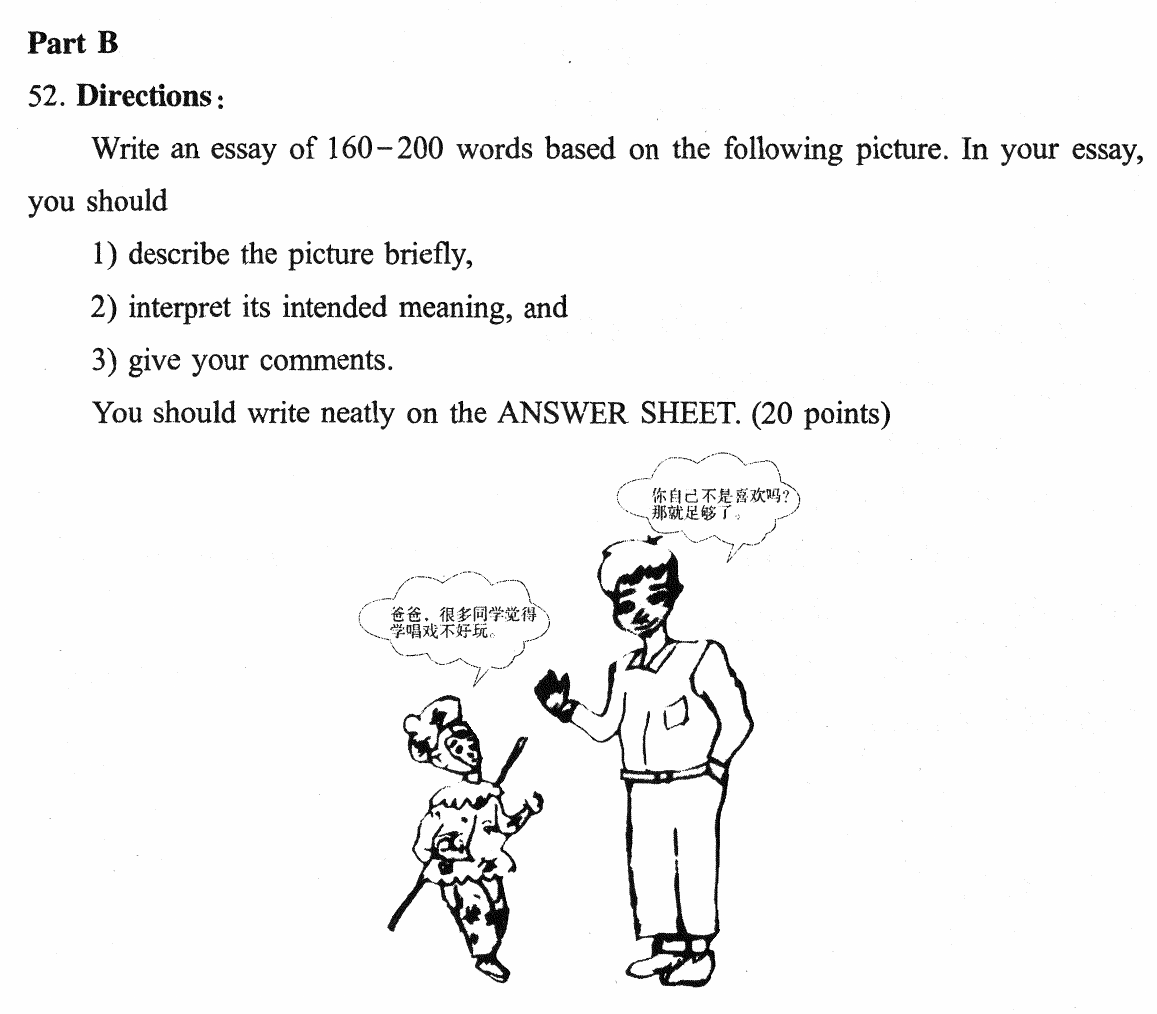
本页为2021年考研英语一真题,支持完形填空、阅读、新题型、翻译和写作在线练习。
写作题目:给刚毕业、打算来中国找工作的外国朋友提建议。
翻译题干节选:World War was the watershed event for higher education in modern Westem societie…